
Short answer
- A standard visit pumps the waste tank, recharges the deodorizing liquid, cleans the surfaces and restocks paper and sanitizer.
- The OSHA construction toilet table does not set a visit frequency; the rental agreement does.
- PSAI's event chart assumes no pumping during the event and about 200 uses per unit.
What a visit includes
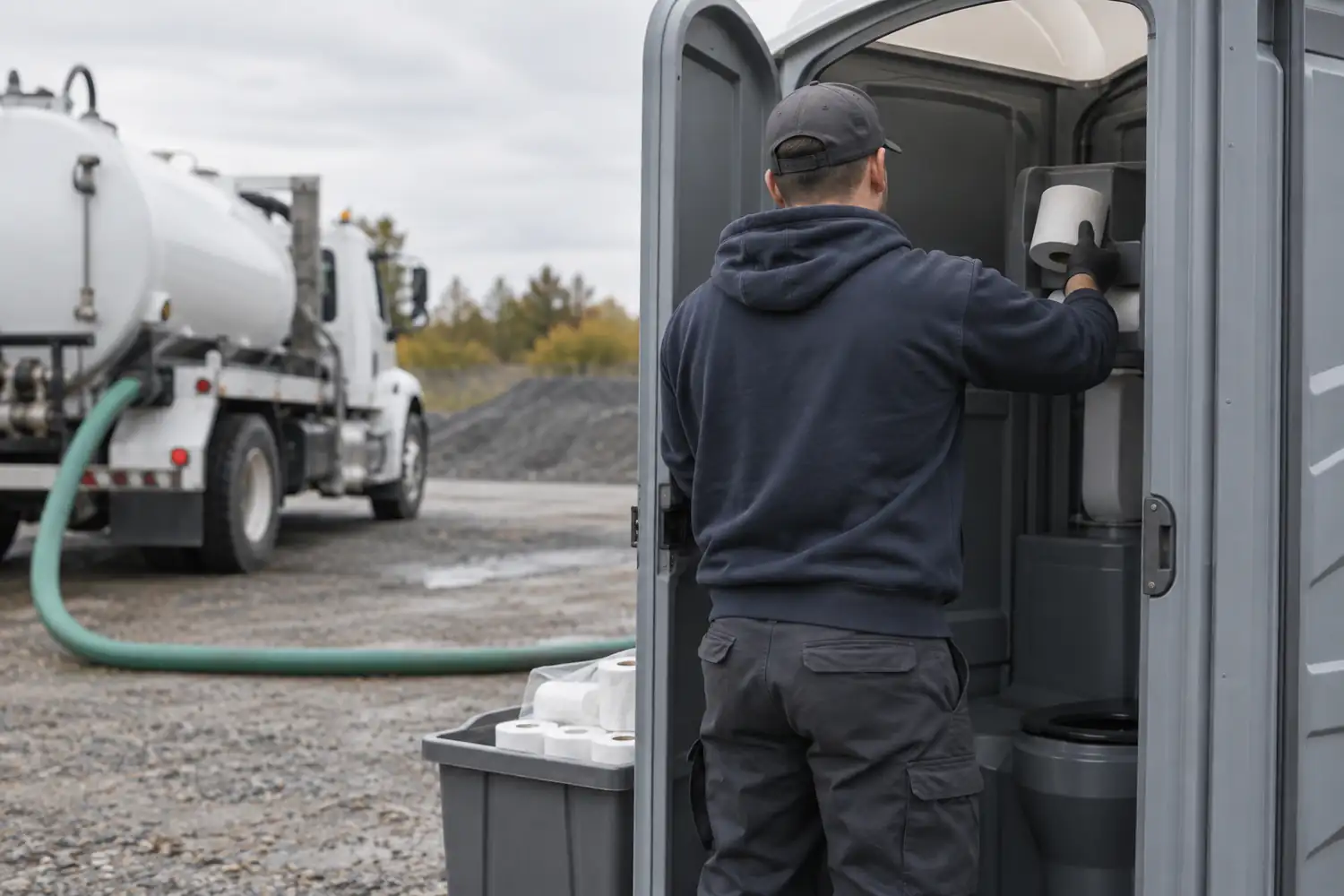
A technician pumps the waste tank with a vacuum truck, adds fresh water and deodorizing chemical to the tank, cleans the seat, urinal, walls and floor, and restocks toilet paper and any sanitizer or hand-wash supplies. Ask your rental contact to list what each visit covers, because extras such as graffiti removal or a deep clean may be separate.
Setting the frequency
The schedule depends on users, days of use and heat. PSAI notes that on warmer days users drink more and make more trips, so a schedule that works in spring may need more frequent visits in midsummer. Weekly service is a common starting point for a job site with a full crew every weekday; a unit used only on weekends may need a different day.
Service during events
PSAI's special events chart counts units for an event with no pumping, at about 200 uses per unit. A two-day festival or an all-day tournament needs an overnight visit, or more units, to stay usable. Schedule that visit when booking.
Keep the truck route open
The truck needs to park close to the unit. Keep the path clear of material, vehicles, tents and fencing on service day, and tell your rental contact about locked gates or restricted hours. A missed visit because of a blocked route can leave a full unit for another week.
If a unit is full, damaged or tipped
Close it off, keep people away and call your rental contact with the address, the unit's location and the problem. Do not add chemicals, lift a full unit or try to right a tipped one; the waste tank can spill. Report vandalism the same way, with a photo.
Records worth keeping
Keep the service day, the service contact and the date of each visit with the project or event file. On a job site the superintendent can then show when units were serviced if a worker or inspector asks.